
HISTORY
FORGED BRAVERY
IOrigin and Foundation
The STATE OF PALASNI was a historical Rajput principality situated in the Sankheda Mewas division of the Rewa Kantha Agency, under the Bombay Presidency of British India. The State was governed by the Parmar Rajputs, whose ruling family traced its ancestry to the celebrated medieval Parmara dynasty of Malwa and Dhar, and, according to its traditional genealogy, to the legendary EMPEROR VIKRAMADITYA of Ujjain.
The family's historical traditions associate its martial heritage with the ideals of EMPEROR VIKRAMADITYA, particularly courage, strategic leadership, territorial defence and the protection of its people. The Parmar lineage carried these traditions into western India, where different branches established their authority across the territories of present-day Gujarat.
Following the decline of the central Parmara power in Malwa during the medieval period, branches of the clan migrated westward and established themselves in the rugged, forested and strategically significant regions of eastern Gujarat. Among the principalities associated with this historical expansion was the STATE OF PALASNI, which developed its own hereditary administration, territorial identity and regional alliances.
Situated within the Mewasi landscape, Palasni's geographical surroundings played an important role in its military and political history. Its forested terrain, natural approaches and knowledge of the surrounding countryside provided strategic advantages in defending the principality against external incursions.
The State's historical identity was shaped by an enduring commitment to independence, military preparedness, regional solidarity and the preservation of its hereditary Rajput traditions.
IIMilitary Heritage
The history of the STATE OF PALASNI is closely associated with a tradition of territorial resistance and unconventional military strategy. The ruling family and its forces relied upon the difficult terrain of eastern Gujarat, employing guerrilla warfare, strategic ambushes, mobility and intimate knowledge of local geography to defend their territory. Rather than relying exclusively on conventional battlefield engagements, Palasni's military approach emphasised tactical advantage, surprise and the effective utilisation of its natural surroundings.
Resistance During the Mughal Period
During the reign of Emperor Aurangzeb, Mughal military campaigns extended across western India, including the strategically important routes connecting the interior of Gujarat with Surat. According to the historical traditions preserved by the ruling family, a Mughal military force travelling through the Nasvadi–Palasni corridor towards Surat encountered determined resistance from the local Rajput forces.
The account maintains that the invading troops were confronted through local military resistance and guerrilla tactics, ultimately being driven away from the territory. The episode became part of Palasni's inherited martial history and reinforced the principality's reputation for resisting external military incursions.
Palasni's security was also strengthened through longstanding alliances and fraternal relationships with neighbouring ruling houses and regional communities, particularly those associated with Gad Boriyad, Nasvadi, Chhota Udepur and Rajpipla. These relationships were founded upon mutual understanding, regional solidarity and the shared importance of protecting their respective territories.
The family's historical account maintains that no lasting Muslim military stronghold was established in Palasni, a circumstance attributed to its defensive preparedness, geographical advantages and strong regional alliances.
The Gaekwad Conflicts: Thirteen Military Expeditions
During the eighteenth century, as Mughal authority declined, the Gaekwad dynasty of Baroda expanded its political and fiscal influence across Gujarat, seeking tribute and greater authority over the smaller Mewasi principalities. The STATE OF PALASNI, however, maintained a determined position concerning its territorial independence.
According to the historical accounts preserved by the Palasni ruling family, during the reign of THAKORE SHRI JITSINHJI RAJPARMAR, the Gaekwad forces undertook thirteen military expeditions against Palasni. The family's tradition records that all thirteen expeditions ended unsuccessfully for the attacking forces, which were defeated or compelled to withdraw without achieving their intended objective.
Palasni's military strategy relied upon guerrilla warfare, tactical positioning, knowledge of the terrain and the mobilisation of local support. These methods enabled a comparatively small principality to resist the military ambitions of a considerably larger regional power.
The thirteen encounters became an enduring part of the State's historical identity, representing the determination of its ruling family and people to defend their homeland. The relationship with Baroda was therefore not one of unquestioned submission — Palasni maintained its distinct political identity and resisted attempts to impose authority through military force.
IIIThe British Period
The expansion of British influence in western India during the early nineteenth century transformed the political structure of the Rewa Kantha region. The British East India Company increasingly intervened in the affairs of the smaller principalities, particularly concerning tribute arrangements, regional security and disputes involving the Gaekwad administration.
The arrangements associated with British Resident ALEXANDER WALKER in 1820 sought to regulate the collection of tribute from the Mewasi territories and establish a more structured political relationship between Baroda and the smaller chiefs. The STATE OF PALASNI subsequently came under the political supervision of the Rewa Kantha Agency within the administrative framework of British India. Nevertheless, the ruling family continued to preserve its distinct hereditary identity and traditional institutions.
According to the family's historical account, British authorities made efforts to persuade Palasni to enter into a closer political association with the Gaekwad State of Baroda. These proposals were declined by the ruling family, which preferred to maintain Palasni's separate political identity rather than accept incorporation into the Baroda establishment.
During the reigns of THAKORE SHRI CHANDRASINHJI JITSINHJI RAJPARMAR and his successor, THAKORE SHRI SARDARSINHJI CHANDRASINHJI RAJPARMAR, commercial relations with Baroda developed through trade connections, including the spice trade. This relationship illustrates the pragmatic approach of the ruling family: military resistance when territorial interests demanded it, diplomacy when political circumstances permitted it, and commerce wherever mutual interests could be advanced.
IVGovernance, Administration and Regional Development
The hereditary rulers of the STATE OF PALASNI bore the title of THAKORE, exercising traditional authority over their principality. Despite its comparatively modest geographical area, historically described as approximately twelve square miles, the State maintained its own established administrative structure.
The THAKORE was assisted by a Karbhari, or state administrator, responsible for revenue management, administrative affairs and the implementation of the ruler's decisions. The population comprised several communities, including Rajputs, Kolis and Bhils. The administration was rooted in established local customs, community relationships and the responsibilities of hereditary leadership.
During the late nineteenth and early twentieth centuries, the ruling family increasingly incorporated developmental and administrative initiatives into the governance of Palasni. These included agricultural development, improvements in land revenue administration, primary education and regional connectivity, strengthening the relationship between Palasni and surrounding commercial centres.
The reigns of THAKORE SHRI CHANDRASINHJI JITSINHJI RAJPARMAR and THAKORE SHRI SARDARSINHJI CHANDRASINHJI RAJPARMAR represented an important period in the development of the State's administrative, commercial and institutional identity.
VAccession to Independent India
India's independence in August 1947 brought about a historic transformation in the political structure of the subcontinent. The princely states were required to determine their future relationship with independent India through the constitutional and political processes of accession and integration.
THAKORE SHRI SARDARSINHJI CHANDRASINHJI RAJPARMAR, the last ruling THAKORE of Palasni, signed the Instrument of Accession, bringing the principality into the constitutional framework of independent India. The STATE OF PALASNI subsequently became part of the integration of the Gujarat princely states, with its merger taking effect in 1948. Following the linguistic reorganisation of Indian states in 1960, its historical territory became part of the newly established State of Gujarat.
Although the integration brought an end to Palasni's existence as a separately administered princely state, it did not extinguish the historical identity, ancestry, traditions or cultural responsibilities of its ruling family. The transition represented a new chapter in the family's history — from hereditary territorial administration to the preservation of heritage, community leadership and public service within independent India.
VIThe Royal Family: Heritage, Preservation and Public Service
The descendants of the ruling Parmar Rajput family continue to reside in Gujarat, maintaining their ancestral associations, historical structures, traditions and connections with the people of Palasni. Their contemporary activities encompass heritage preservation, cultural participation, community development and humanitarian welfare.
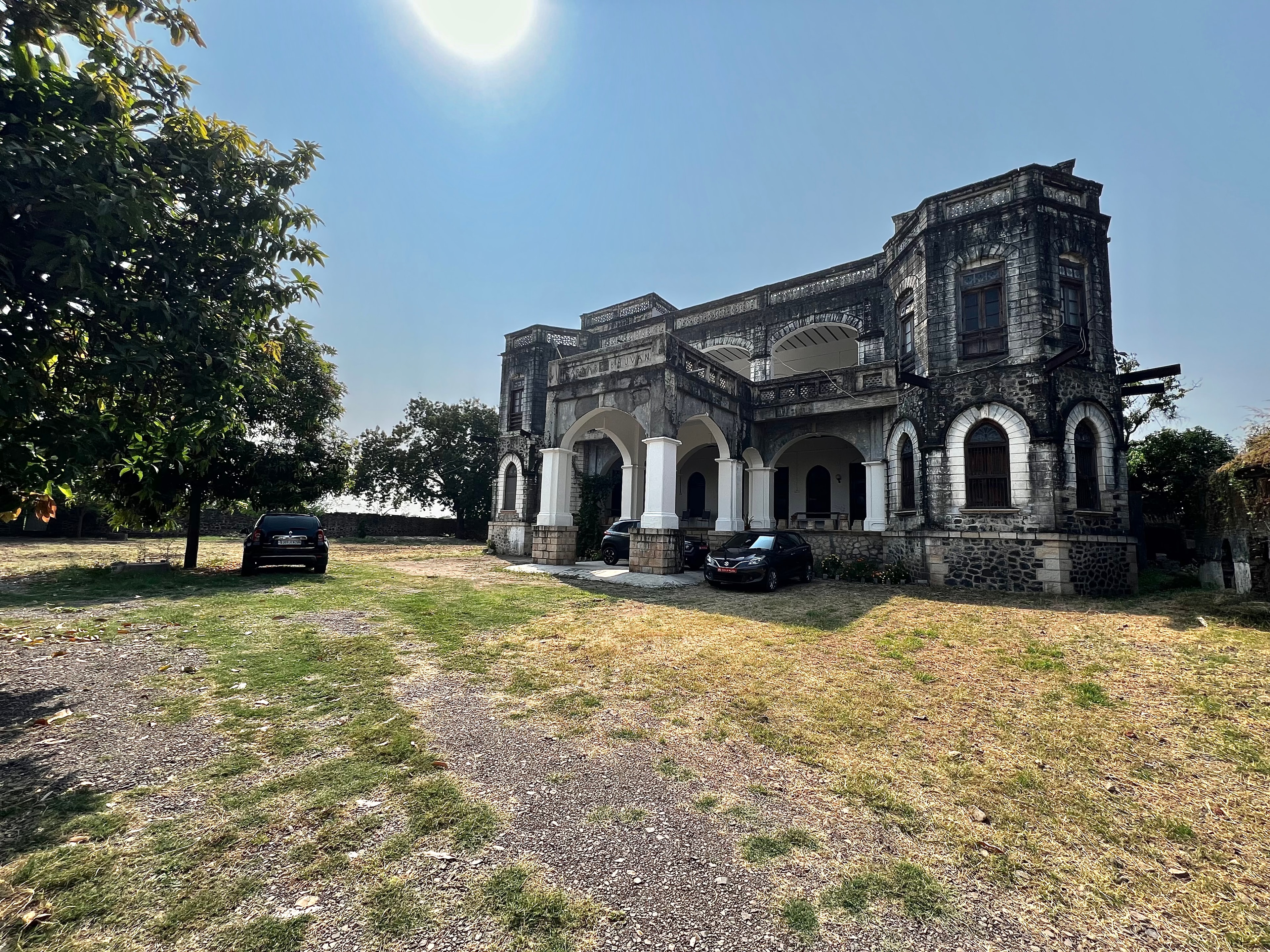
Ancestral Seat
SARDAR BHAWAN
150+ years old ancestral Darbargadh of the ruling family — a symbol of Palasni's historical and architectural heritage, preserved for future generations.
Humanitarian Work
PARMAR FOUNDATION
Established in 2021, undertaking education, food distribution, rural development, healthcare assistance and inclusive community empowerment.
Heritage Hospitality
1864 PALASNI
A contemporary initiative dedicated to heritage-led hospitality and the preservation of the region's cultural identity, named for the birth year of THAKORE SHRI JITSINHJI RAJPARMAR.
VIIA Continuing Legacy
The history of the STATE OF PALASNI is a story of hereditary leadership, Rajput martial traditions, territorial resistance, regional alliances, commercial diplomacy and the preservation of cultural identity.
From its traditional genealogical associations with the Parmara dynasty and EMPEROR VIKRAMADITYA to the military resistance against Mughal and Gaekwad expeditions, Palasni's historical narrative reflects the determination of its ruling family to defend its territory and maintain its distinct identity.
Its relationships with Gad Boriyad, Nasvadi, Chhota Udepur and Rajpipla demonstrate the importance of regional brotherhood and collective security, while its commercial engagement with Baroda reflects an ability to pursue diplomacy and economic cooperation without abandoning its historical identity.
Today, through the preservation of SARDAR BHAWAN, the humanitarian work of PARMAR FOUNDATION and the development of 1864 PALASNI HERITAGE FARMSTAY, the family's legacy continues through heritage conservation, social responsibility and rural development.
The present generation, represented by HEIR APPARENT YUVRAJ SHRI YAASHRAJSINHJI DIGVIJAYSINHJI PARMAR, carries forward this inheritance with a commitment to preserving the history, traditions and cultural dignity of Palasni.
The Legacy of the State of Palasni
A principality shaped by courage.
A heritage sustained by brotherhood.
An identity preserved through generations.
STATE OF PALASNI continues to endure.